
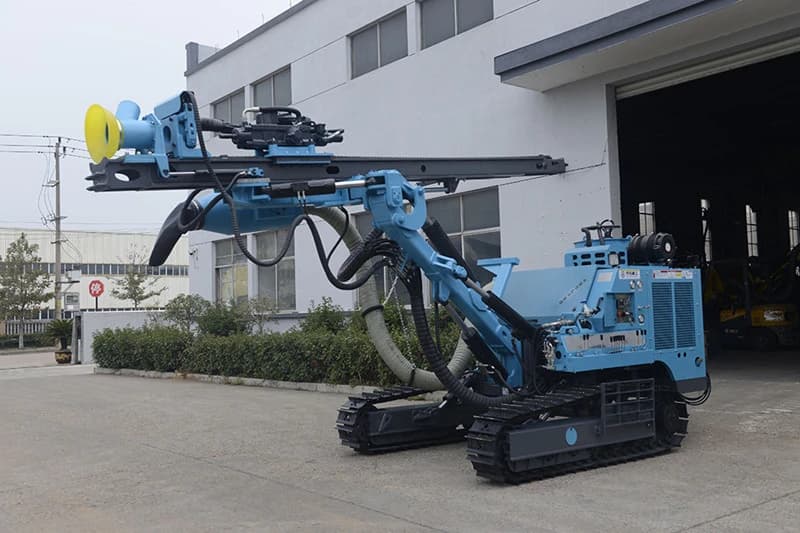
Identified model

HT500 Crawler Drilling Rig

Model reference: HT500

Drilling Rig configuration based on the HT500 reference. Confirm operating conditions before final selection.

Drilling RigsTechnical content available

Overview

HT500 Crawler Drilling Rig (HT500) is an identified drilling-rig record for projects that require the drilling method and ground conditions to be defined before equipment is selected. Product selection is shaped by the planned hole diameter, target depth, formation, drilling method, access route, compressor or mud support, tooling and safe working envelope. The captured table is limited to fields associated with the catalog record and does not promise a result in any formation or project. COWIN MACHINE can review the bore objective, site mobility, air or mud supply, drill-pipe program, transport constraints and local safety requirements with the buyer. Configuration subject to application review. For the HT500 Crawler Drilling Rig record, the review should document the actual application, site interfaces and operating sequence before any configuration is confirmed.

Key Benefits

  • Connects the rig choice to the bore objective
  • Promotes method and circulation planning before deployment
  • Identifies compatible tool-string requirements early
  • Clarifies site mobility and support-equipment constraints
  • Keeps formation-specific performance claims out of unverified content

How It Works

A drilling rig combines a mast, feed system, rotary head, power source, controls and a drill-string handling arrangement to advance a borehole. The drilling method is selected around the formation, hole objective and circulation medium. In air drilling, compressed air helps clear cuttings; in mud drilling, fluid management becomes part of the operating system. Torque, rotary speed, feed travel and drill-pipe dimensions must be matched to the selected method and approved tooling. Mobility and site setup depend on terrain, access, support equipment and safe working conditions. For the HT500 Crawler Drilling Rig record, the review should document the actual application, site interfaces and operating sequence before any configuration is confirmed. This working-principle guidance explains general selection context only. Exact capability, limits, materials, test conditions and compatibility remain subject to the approved model record and application review.

Typical Applications

  • Water-well drilling where a bore objective and formation information are available
  • Agricultural irrigation projects with documented access and depth requirements
  • DTH drilling after compressor, hammer and bit compatibility review
  • Quarry or mining support under an approved drilling plan
  • Foundation or anchoring work with site-specific engineering requirements
  • Geotechnical investigation subject to method and safety review

Selection Guide

  • Target depth, hole diameter and expected formation
  • Air, mud or other drilling method and circulation requirements
  • Rotary torque, speed, feed stroke and pullback needs
  • Drill-pipe diameter, length and compatible tool string
  • Crawler mobility, terrain, transport and setup space
  • Compressor, pump, power and support-equipment availability

Technical Specifications

Drilling depthMax.25m
Hole diameter90-203mm
Drilling methodConfiguration subject to application review.
Air consumptionConfiguration subject to application review.
Air pressureConfiguration subject to application review.
Rotary torque3600N.m
Rotary speed1500r/min
Feed strokeConfiguration subject to application review.
Drill pipe diameter76-89mm
Engine powerConfiguration subject to application review.
DimensionsConfiguration subject to application review.
Weight5400kg

Standard Configuration

  • Rig structure, rotary and feed arrangement subject to the approved model record
  • Controls and power package reviewed for the planned drilling method
  • Drill-string and circulation interfaces confirmed before quotation

Optional Configuration

  • Air, mud or water circulation support subject to the drilling plan
  • Drill-pipe, hammer, bit and handling accessories matched to the tool string
  • Transport and site-setup support subject to access review

Operation, Maintenance and Safety

  • Follow the approved rig and engine maintenance schedule
  • Inspect mast, feed, hydraulic lines, guards and fasteners before use
  • Use approved lifting and drill-pipe handling procedures
  • Confirm stable setup, exclusion zones and ground conditions
  • Depressurize air or fluid systems before service
  • Replace worn consumables using confirmed compatibility information

Related Products / Compatible Equipment

Product FAQ

Which drilling method should I use?

The choice depends on formation, hole objective, circulation medium and the project’s approved drilling plan.

How are depth and diameter selected?

Provide the planned bore, geology information and required casing or completion details for review.

Is an air compressor included?

Air supply must be sized separately against the drilling method, hammer and operating conditions.

Can the rig work on any terrain?

Mobility and setup require a site-access and ground-condition review.

Are formation results guaranteed?

No. Formation behavior and operating outcomes must be evaluated for each project.

Technical Inquiry

Product name, model reference and page URL are included with this inquiry.

WhatsAppGet a Quote