
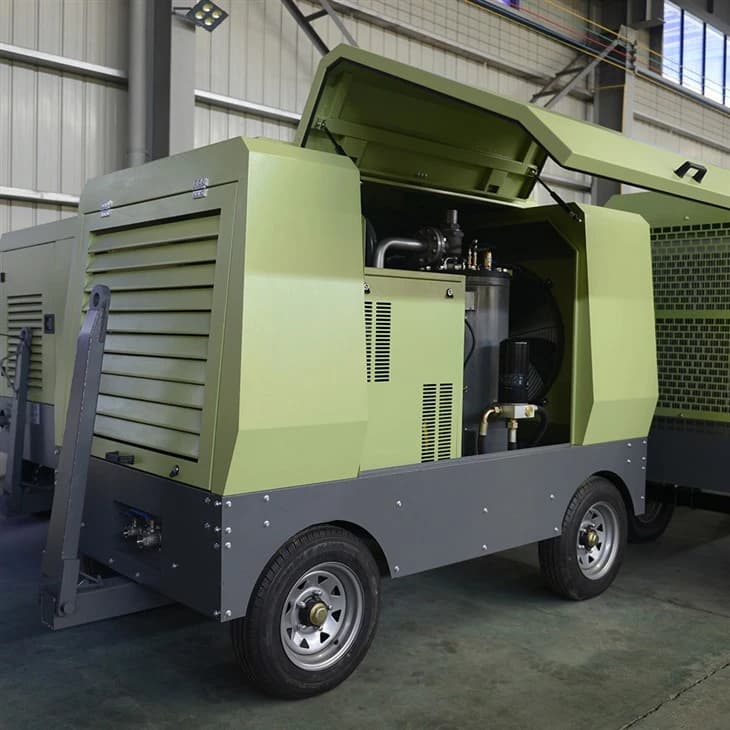

Image status: Authorized project image available
Identified model
KYLC-18 Electric Portable Screw Air Compressor
Model reference: KYLC-18
Air Compressor configuration based on the KYLC-18 reference. Confirm operating conditions before final selection.
Overview
KYLC-18 Electric Portable Screw Air Compressor (KYLC-18) is presented for industrial compressed-air planning where the duty must be defined before equipment is selected. The review begins at the point of use: required pressure, simultaneous air demand, air cleanliness and the site power arrangement. That information is more useful than a model name alone when the equipment may serve pneumatic tools, drilling support or a workshop distribution line. The published specification table reproduces only fields captured in the approved catalog record for this identified model. It does not establish a site guarantee. COWIN MACHINE can use the project brief to check whether the required air delivery, pressure range, treatment train, access and service plan are aligned. Configuration subject to application review.
Key Benefits
- Creates a clearer basis for pressure and flow matching
- Separates air-treatment requirements from the compressor selection
- Supports discussion of leakage and pressure-loss reduction
- Helps identify portable versus fixed installation constraints
- Keeps final equipment scope tied to documented site conditions
How It Works
A compressed-air package converts mechanical input into pressurized air. In a rotary screw arrangement, the compression element draws in and compresses air before cooling, separation and downstream treatment are considered. The user’s process determines the useful pressure at the point of use, not simply the pressure shown at the compressor outlet. A receiver, filtration, drying, distribution pipework and condensate management may all affect delivered air quality and pressure stability. Diesel and electric drives are selected around site utilities, mobility, ventilation and service logistics. The final configuration should therefore be reviewed against measured or documented demand, peak events and the intended duty cycle. For the KYLC-18 Electric Portable Screw Air Compressor record, the review should document the actual application, site interfaces and operating sequence before any configuration is confirmed.
Typical Applications
- Quarry or mining support where air demand and access conditions are documented
- DTH drilling support after pressure and free-air-delivery matching
- Road and infrastructure crews using pneumatic tools
- Workshop air distribution with defined treatment requirements
- Shipyard or fabrication work where ventilation and power are reviewed
- Rental or temporary jobsites with documented transport and service access
Selection Guide
- Required working pressure at the point of use
- Free-air-delivery demand, simultaneous users and peak events
- Electric supply availability versus diesel logistics
- Stationary installation versus portable access requirements
- Air quality, filtration, drying and condensate requirements
- Ambient temperature, ventilation, hose routing and maintenance access
Technical Specifications
| Air delivery / FAD | 18.5m³/min |
|---|---|
| Working pressure | 13bar |
| Motor or engine power | 90kw |
| Power source | 380V/50HZ |
| Compression stage | Configuration subject to application review. |
| Cooling method | Air Cooled |
| Air outlet size | Configuration subject to application review. |
| Dimensions | 284316252140mm |
| Weight | 670kg |
| Noise level | 99dB |
Standard Configuration
- Drive package and compression element subject to the approved model record
- Controls and protection matched to the confirmed duty
- Cooling and separation arrangement reviewed against installation conditions
Optional Configuration
- Air receiver, aftercooler, dryer or filters where application review requires them
- Hose, coupling and distribution accessories matched to the site
- Portable or stationary installation support subject to project review
Operation, Maintenance and Safety
- Follow the approved model-specific maintenance instructions before service
- Isolate and depressurize the system before opening lines or filters
- Inspect hoses, couplings and guards for damage before operation
- Monitor filters and condensate controls according to the duty
- Check distribution leakage and pressure loss as part of system review
- Keep ventilation paths clear where the package is installed


